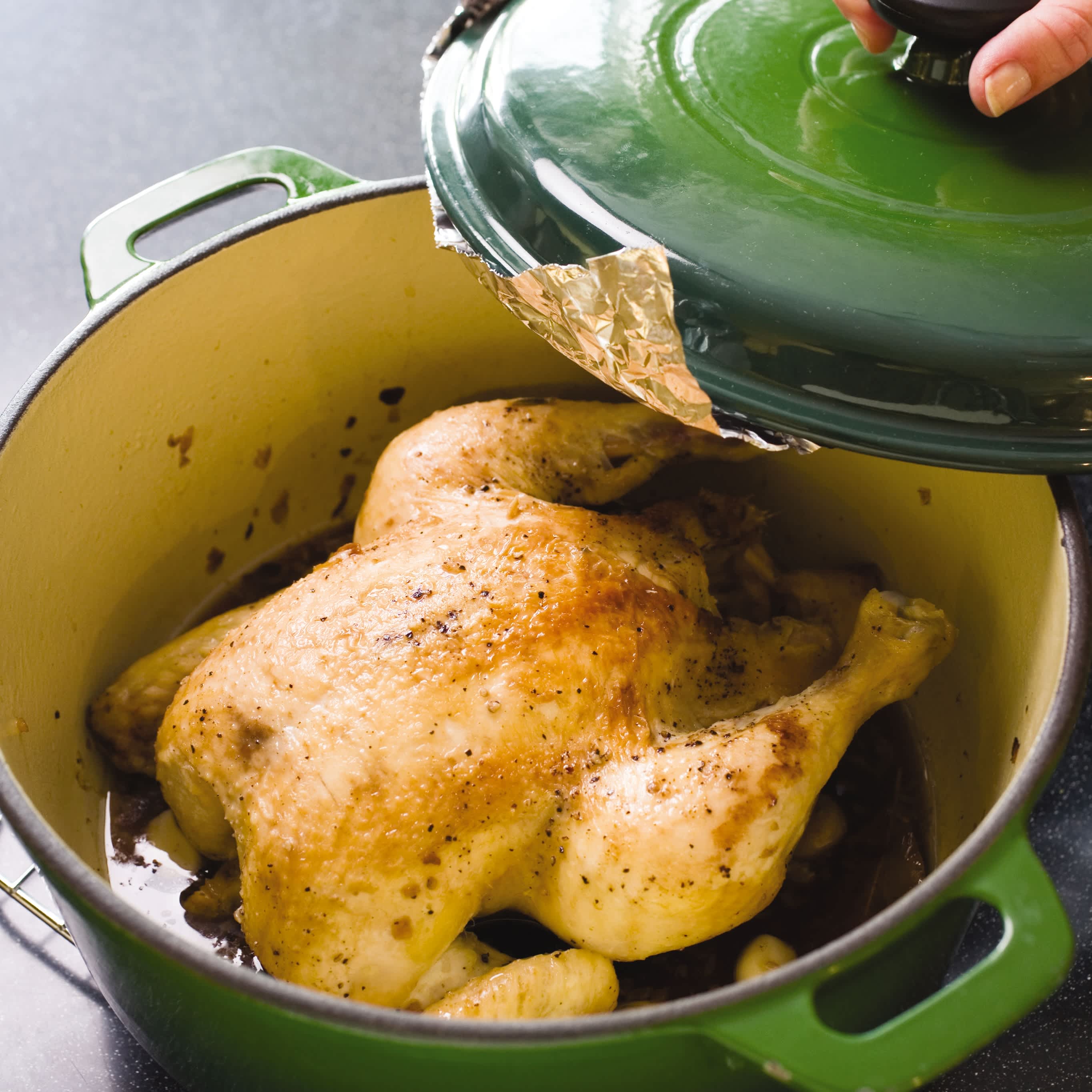
Dry Pot Cooking: Unlock Intense Flavor with French Chicken
Imagine a whole roasted chicken so incredibly tender, so bursting with concentrated flavor, that it redefines your understanding of succulent poultry. Forget about endlessly basting or complicated brining; the secret lies in a deceptively simple yet brilliant culinary technique known as dry pot cooking, often referred to as
French Chicken in a Pot. This method, perfected by culinary experts like Cook's Illustrated, focuses on intensifying the chicken's natural essence, delivering an unforgettable dining experience with minimal fuss.
When we talk about "French Chicken," we're not suggesting you need a fowl with a beret and an accent – though the charming thought of "Le Cluck!" chickens is rather amusing! Instead, it refers to a refined cooking approach that prioritizes deeply flavored, moist meat over the crispy skin often associated with traditional roasting. If you're willing to trade that crunch for an unparalleled tenderness, you're about to discover your new favorite way to prepare a whole chicken.
The Magic of Dry Pot Cooking: A French Culinary Secret
At the heart of this extraordinary dish is the "dry pot" method. Unlike traditional braising, which involves cooking meat in a generous amount of liquid (like wine, broth, or water) in a covered pot, dry pot cooking adds virtually no external liquid. Instead, a whole chicken is placed into a tightly sealed vessel, typically a heavy-bottomed Dutch oven, and cooked low and slow in a moderate oven.
The science behind this technique is elegantly simple and incredibly effective. As the chicken gently heats, its natural juices are released into the pot. Because there's no added liquid, these precious juices aren't diluted. Instead, they circulate within the sealed environment, essentially bathing the chicken in its own highly concentrated essence. This self-basting process ensures that the meat reabsorbs its moisture and flavor, leading to an incredibly juicy texture and a depth of taste that's often lost in other cooking methods.
Think of it as the ultimate flavor feedback loop. The wet environment created within the dry pot facilitates an ongoing exchange between the chicken and its own rendered fat and aromatic compounds. This contrasts sharply with braising, where added liquids can dilute the chicken's inherent flavors, or traditional roasting, where moisture can evaporate into the open air. The result? A
French Chicken in a Pot that's not just moist, but profoundly flavorful from bone to skin.
Anatomy of Flavor: What Makes This Chicken So Special?
Despite its sophisticated outcome, the ingredient list for
Cook's Illustrated French Chicken: Simple, Juicy, Unforgettable is remarkably humble. This simplicity underscores a core tenet of French cooking: relying on high-quality ingredients and a perfected technique to let their natural flavors shine.
Here's a breakdown of the key components and their roles:
- The Whole Roasting Chicken: A 4 ½ to 5-pound roasting chicken is ideal. The size allows for even cooking in the Dutch oven, and a good quality bird provides the best foundation for flavor. Ensure giblets are removed.
- Salt and Pepper: These are non-negotiable. Kosher salt and freshly ground black pepper are crucial for seasoning the chicken thoroughly, drawing out moisture, and enhancing its inherent taste.
- Olive Oil: Used sparingly to brown the chicken initially. This step is key for developing some initial fond (the browned bits at the bottom of the pot) and locking in surface flavor before the low and slow cook.
- Aromatics (Onion, Celery, Garlic): These form the classic French 'mirepoix' base, though typically without carrots in this specific dry pot recipe. They gently infuse their savory notes into the circulating juices, subtly flavoring the chicken from within without overpowering its natural taste. The garlic cloves, left whole and peeled, become wonderfully soft and mellow.
- Bay Leaf and Fresh Rosemary: These herbs provide a fragrant, earthy depth that complements chicken beautifully. The bay leaf adds a subtle, almost medicinal warmth, while rosemary contributes its distinctive piney aroma. They contribute to the "unforgettable flavor" promised by the technique.
- Lemon Juice (Optional but Recommended): A small squeeze of fresh lemon juice at the end brightens the entire dish, cutting through the richness and adding a vibrant finish. It's a testament to how simple additions can elevate the overall experience.
The choice of a heavy-bottomed Dutch oven is also paramount. Its excellent heat retention and tight-fitting lid are critical for creating and maintaining the sealed, moist environment essential for this dry pot cooking method. Without it, the "essence of its own juice" would simply escape.
Mastering the Technique: Step-by-Step for Succulent Results
Achieving that perfect, juicy
french chicken in a pot is less about complex steps and more about precision and patience.
1.
Preparation is Key: Begin by placing an oven rack in the lowest position and preheating your oven to a low 250 degrees Fahrenheit (120 degrees Celsius). This low temperature is vital for the slow, gentle cooking process. Pat your chicken thoroughly dry with paper towels. This step is crucial, as a dry surface promotes better initial browning and prevents steaming at the start. Season the entire chicken generously with salt and pepper.
2.
Initial Searing: Heat about a tablespoon of olive oil in your Dutch oven over medium heat until it just begins to smoke. Carefully place the chicken breast-side down in the hot oil. Allow it to sear undisturbed for about 5-7 minutes. This initial browning creates a beautiful golden crust on one side and develops complex flavors (the Maillard reaction) that will contribute to the rich jus.
3.
Adding Aromatics: While the chicken is browning, scatter your chopped onion, celery, and whole garlic cloves around and under the chicken. Add the bay leaf and rosemary sprig (if using).
4.
The Slow Cook: Flip the chicken breast-side up. Cover the Dutch oven tightly with its lid. Transfer the pot to the preheated oven. Now, let the magic happen. The chicken will cook for approximately 2 to 2.5 hours, or until a meat thermometer inserted into the thickest part of the thigh (without touching bone) registers 170-175 degrees Fahrenheit (77-79 degrees Celsius). Resist the urge to peek! Every time you lift the lid, you release the precious steam and concentrated juices.
5.
Resting and Finishing: Once cooked, remove the Dutch oven from the oven. Carefully transfer the chicken to a cutting board, tent it loosely with foil, and let it rest for at least 15-20 minutes. This resting period allows the juices to redistribute throughout the meat, ensuring maximum succulence. During this time, you can prepare the jus from the pot. Before serving, a squeeze of fresh lemon juice over the carved chicken brightens its rich flavor.
Beyond the Bird: Utilizing Your Flavorful Jus
The liquid left at the bottom of your Dutch oven after cooking is pure gold – a concentrated, intensely flavorful jus that should not go to waste. It's the essence of your
french chicken in a pot.
Here's how to handle it:
1.
Separate the Fat: Pour the pan juices into a fat separator, or into a liquid measuring cup if you don't have one. Allow it to settle for a few minutes. The fat will rise to the top. Carefully pour off the clear, flavorful jus from the bottom, leaving the fat behind. If you're making this ahead, you can chill the juices; the fat will solidify on top and can be easily scraped off.
2.
Enhance and Serve: You now have a rich, natural sauce. You can simply pour it over the carved chicken, use it as a base for a quick gravy, or even reduce it slightly on the stovetop for an even more intense glaze. For an extra touch, you can mash the cooked garlic cloves from the pot into the jus for a creamy, garlicky dimension.
This concentrated jus is not just a condiment; it's a culinary reward for your patience, embodying the full, undiluted flavor of your beautifully cooked chicken.
Conclusion
The
French Chicken in a Pot method, a masterclass in dry pot cooking, is a testament to the power of simplicity and thoughtful technique. By forgoing the quest for crispy skin in favor of a profoundly moist, intensely flavored meat, you unlock a culinary experience that is both elegant and deeply satisfying. It's an accessible way to elevate your home cooking, proving that extraordinary flavor often comes from letting quality ingredients and smart methods do the heavy lifting. So, embrace the low and slow, trust the pot, and prepare to be amazed by the succulent depths of flavor that await.